


Why we use IR for Bio-sensor Curing
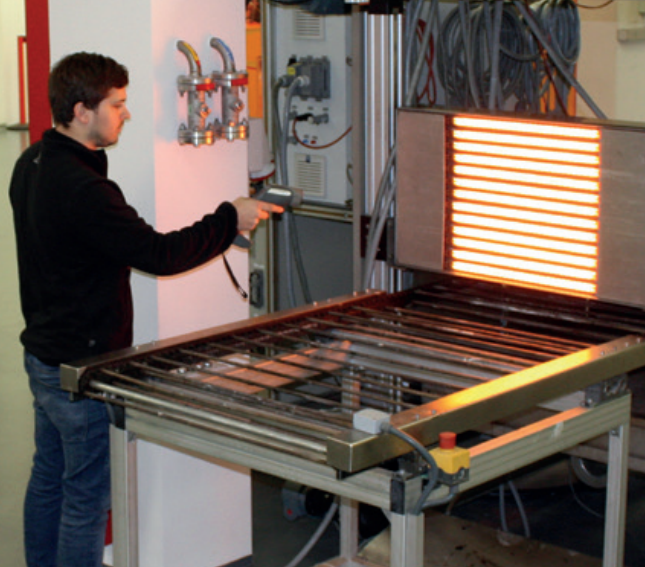
When you’re building bio-sensors, you’re walking a tightrope. You need to cure your adhesives and polymers, but if you get too aggressive with the heat, you’ll fry the biological reagents. It’s a delicate balance. That’s why we stick with infrared (IR) lamps. Instead of heating up a whole room of air, IR sends energy straight to the substrate. It’s radiation, not convection. You aren’t wasting time warming up a giant chamber; you’re just hitting the part that actually needs the heat.
A cleaner way to cure
Think about those old-school forced-air ovens. They’re basically giant heaters that move massive amounts of air around. It’s slow, it’s expensive, and it usually forces you to use chemical catalysts or lead-based stabilizers just to get the materials to cure at lower temperatures. IR is different. It targets the molecular vibrations of the material itself. No VOCs. No nasty stabilizers. And because you aren’t waiting an hour for an oven to reach temperature, your carbon footprint shrinks. It’s just… cleaner.
The trade-off: Speed vs. Precision
For our bio-sensor lines, we usually go with short-wave IR. It’s “instant-on.” The heat density is incredibly high, which means we can keep the overall thermal budget low and save those bio-active layers from burning out. But here’s the catch. Because it’s so powerful, your timing has to be spot on. If you’re off by a few seconds, you’ve just ruined an entire batch of sensors. You can’t eyeball this. You need a precision PLC to trigger the lamps, or you’re just gambling with your yield.
Fitting it into your shop
We designed these systems to be drop-in replacements for those clunky old convection tunnels. Since IR lamps don’t take up much space, you can squeeze more curing stages into a shorter line. We use quartz envelopes to keep things pristine—no contaminants leaching into your cleanroom. Plus, without the fans and air-flow mechanics, there are way fewer things that can break down on the floor. The only real chore? Keep those quartz tubes clean. If dust builds up, you get hotspots. And hotspots lead to cracked glass. Keep them shiny, and they’ll keep working.