


Why we switched to IR heating for CNT fabrication
If you’ve ever worked with traditional resistive furnaces in a semiconductor fab, you know the pain. You spend an hour just waiting for the oven walls to soak in heat before you can even start. It’s a slog. And honestly? Most of that energy is just heating up a giant metal box for no reason. That’s why we moved to shortwave infrared (IR) lamps.
Stop heating the air, start heating the wafer
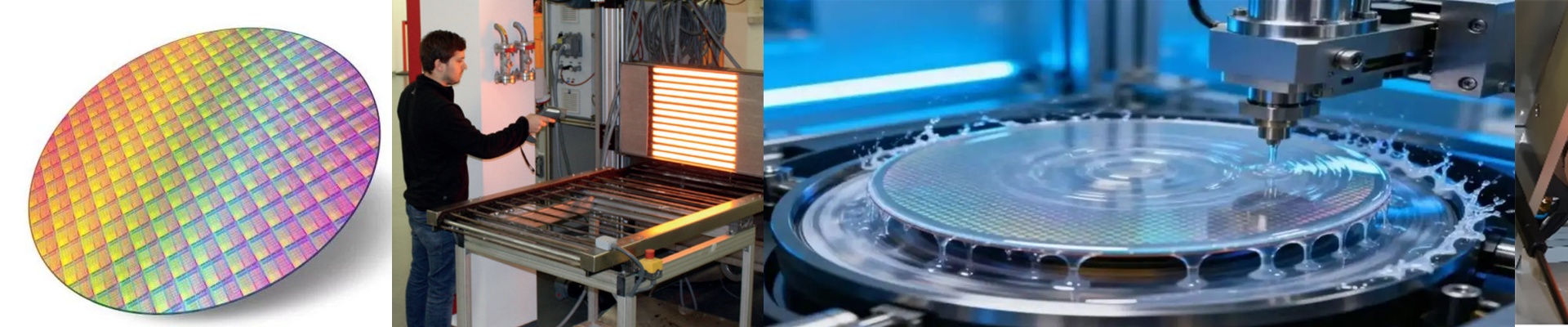
Here is the thing about IR: it doesn’t bother with convection. It doesn’t try to warm up the whole room. Instead, it beams energy straight into the substrate. We basically tune the wavelengths to hit the catalyst’s absorption spectrum perfectly. Because we’re targeting the wafer and ignoring the vacuum chamber, the energy footprint plummets. Plus, the ramp-up is almost instant. No more staring at a clock waiting for a furnace to reach temp. You just turn it on and go.
The nuts and bolts
Building these for high-vacuum environments takes a bit of finesse. We wrap the tungsten filaments in quartz envelopes so nothing gets contaminated. To make sure we aren’t wasting a single watt, we use gold-coated reflectors to bounce every bit of heat right where it needs to be. One tip: make sure your power supplies can handle fast switching. If you want to keep your temperature window tight—we’re talking within ±1°C—you need that rapid cycling.
The catch (and how to fix it)
Now, high-wattage IR arrays pack a serious punch. That’s great for getting more wafers through the door, but it puts a lot of stress on your cooling manifolds. If your chilled water loop isn’t beefy enough to handle the heat coming off those reflectors, you’ll start seeing thermal drift. It’s a headache you don’t want. We usually suggest oversized heat sinks for the lamp housings. It’s a small tweak that keeps your electronics from frying.
A win for the planet (and the budget)
The best part is how this fits into “green factory” goals. It’s a no-brainer. You only pull power when you’re actually growing nanotubes. No more “always-on” waste from legacy systems that eat electricity while sitting idle. You get to hit those carbon-neutral targets without having to mess with your yield. It just works.