
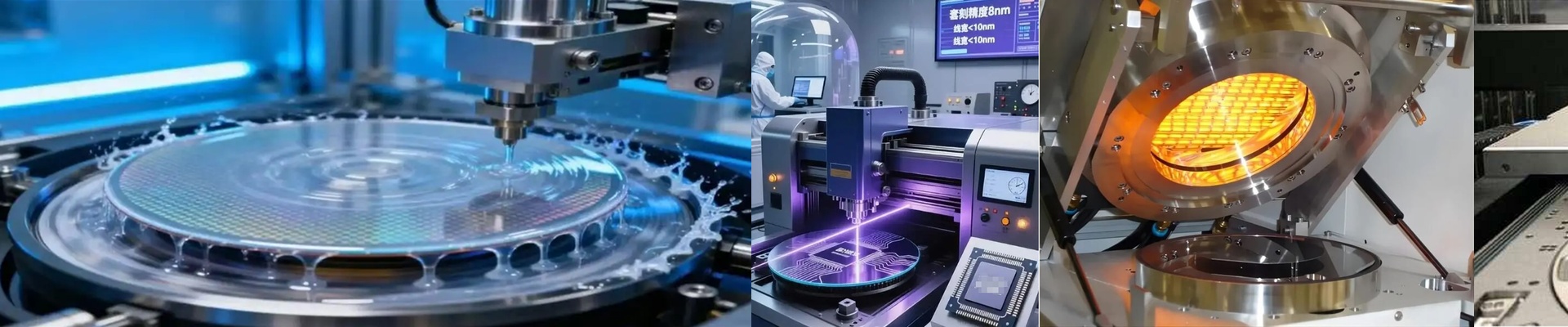
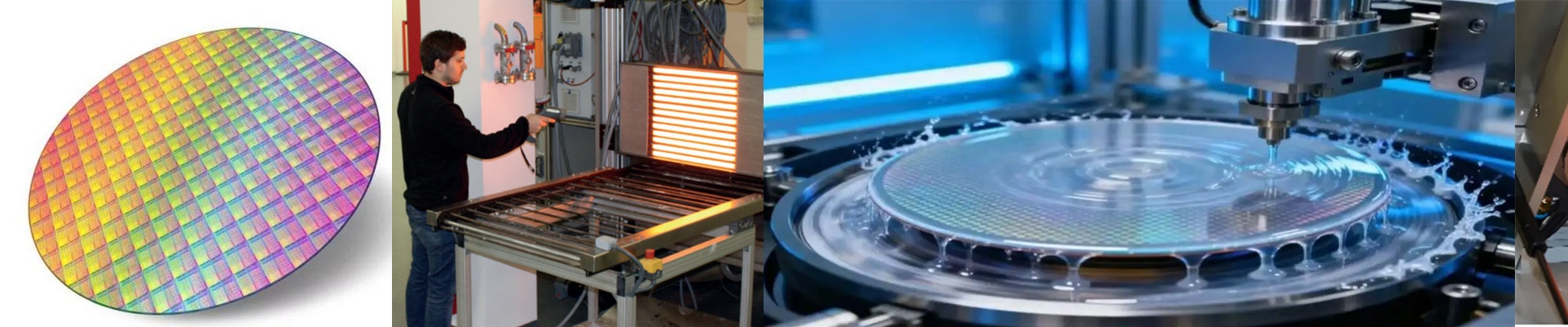
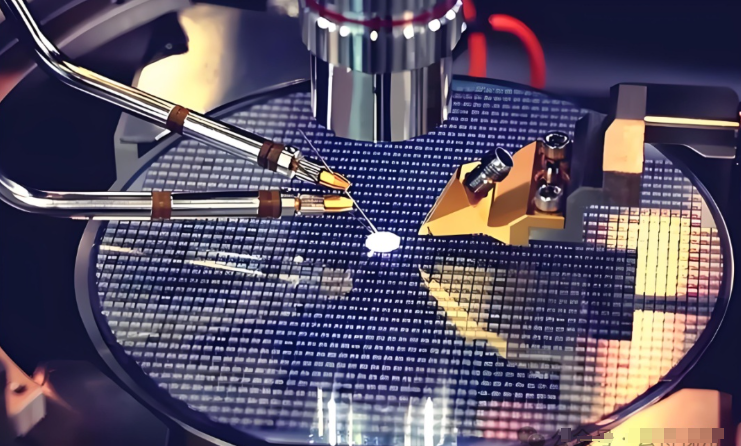
On the FO-WLP line, the bake step is where yield quietly slips away. A soft bake that drifts by 2°C throws off the photoresist profile. Run the hard bake hot, and you’re asking for underfill voids and warpage. You’re fighting for thermal uniformity across the reconstituted wafer while the clock keeps ticking. What matters, technically We built the fan-out wafer level packaging heater for the bake ovens and hot plates that sit between lithography and mold. Short-wave halogen emitters give you fast, direct response, and we hold wafer-level uniformity to ±0.1°C across the active area. The heater body is quartz and high-purity ceramic, so particle generation stays near zero in Class 1–100 cleanrooms. Temperature repeatability is ±0.2°C shot-to-shot, so your soft bake and hard bake profiles stay locked to spec. Control is PID, with SECS/GEM readiness, so you get traceable setpoints, ramp rates, and soak times. Why this works in FO-WLP FO-WLP stacks heterogeneous dies in mold compound, then redistributes I/O. The thermal budget is tight: you have to clear photoresist activation windows without driving copper migration or inducing CTE stress. This heater holds the bake curve precisely, so critical dimension control improves and scum/footing risk drops. Tight uniformity cuts edge-of-field rejects on the RDL, and repeatability shortens qualification cycles. Energy use falls because the emitter heats on demand with minimal thermal mass. It’s built for 24/7 operation, counting on planned maintenance windows, not unplanned downtime. A few practical notes The heater fits most FO-WLP hot-plate platforms, but integration comes down to mechanical envelope, vacuum chucking, and exhaust routing. Match voltage and connector type to your tool. After a lamp replacement, there’s a short warm-up stabilization period—schedule it into PM so bake profiles stay in spec.