

Why We Gold-Coat Our IR Lamps for Chemical Cleaning
When you’re working in semiconductor fab, you’re often dealing with solvents that really don’t like heat. One wrong spark or a hot spot in the wrong place, and you’ve got a serious combustion problem on your hands. That’s why we don’t just use standard lamps. We use gold-coated infrared lamps. It’s the safest way to get precise heat exactly where you need it without turning your cleaning zone into a hazard.
The magic of gold and quartz
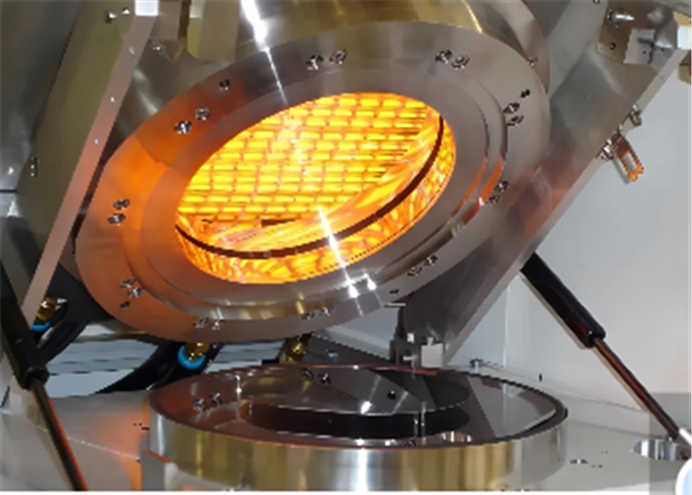
Here is how it works: we put a thin layer of gold on the quartz envelope. This acts like a mirror, pushing all that infrared energy forward. The best part? It stops heat from leaking backward into the lamp housing. When you’re surrounded by volatile chemicals, keeping the chassis cool isn’t just about being “efficient”—it’s about making sure nobody gets hurt. And because cleaning agents are naturally corrosive, we use high-purity quartz. We also use a specialized hermetic seal for the electrode connections. It keeps the nasty chemical vapors out of the lamp so you aren’t replacing bulbs every other week.
Staying stable in the danger zone
It all comes down to the seal. If the end-cap leaks, the lamp fails. Period. We’ve reinforced our sealing process to make sure the halogen gas stays inside and the fumes stay outside. It just works. One quick tip: make sure your power supply is a perfect match. Because the gold coating concentrates the heat so intensely, you need a cooling system that can actually handle it. If you don’t, you might find your mounting brackets warping under the pressure.
Swapping them in
These are designed to be drop-in replacements for your existing heating arrays. We decided to prioritize stability over raw power. By keeping the output steady, we stop that aggressive thermal cycling that usually cracks quartz tubes in chemical baths. It’s a much smoother ride for your equipment. Just double-check that your wiring is rated for the right voltage. You really don’t want to deal with arcing at the terminals.